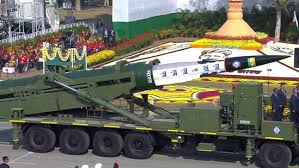
India’s Hypersonic Glide Missile LR-AShM Debuts at 77th Republic Day Parade
India’s 77th Republic Day parade offered more than ceremonial grandeur and marching contingents. It delivered a clear strategic message. For the first time, India publicly showcased its hypersonic glide missile LR-AShM, a long-range anti-ship missile system developed indigenously.
The display was quiet, confident, and deliberate. No dramatic announcements followed. No exaggerated claims surfaced. And that restraint made the moment even more significant.
In defence technology, silence often speaks louder than slogans.
What Is the LR-AShM Hypersonic Glide Missile
The LR-AShM (Long Range Anti-Ship Missile) is an advanced weapon system designed to strike high-value maritime targets. It uses hypersonic glide vehicle (HGV) technology, which allows it to travel at speeds above Mach 10 while maneuvering unpredictably during flight.
Unlike traditional ballistic missiles, hypersonic glide missiles:
- Fly at lower altitudes
- Change trajectory mid-flight
- Reduce reaction time for enemy defence systems
These features make interception extremely difficult using current missile defence technology.
The Defence Research and Development Organisation (DRDO) leads the development of this system under India’s indigenous weapons program.
Why the Republic Day Debut Matters
Republic Day parades do not function as casual exhibitions. The Ministry of Defence carefully curates every system displayed on Rajpath.
When India places a missile on that platform, it signals readiness, confidence, and maturity.
The LR-AShM’s debut suggests three things:
- The technology has crossed key developmental milestones
- The system aligns with India’s operational doctrine
- India wants the world to notice—without saying it out loud
That balance matters in modern deterrence strategy.
Hypersonic Weapons: Why Everyone Wants Them
Hypersonic weapons are not a trend. They are a shift.
Countries like the United States, Russia, and China invest heavily in hypersonic programs because these systems challenge existing defence assumptions. Traditional radar and interception timelines struggle to keep up with hypersonic speed and maneuverability.
India’s entry into this space reflects a logical evolution, not an arms race impulse.
Speed alone does not define hypersonic weapons. Control does. And control takes years of testing, materials research, and guidance system refinement.
LR-AShM and India’s Maritime Strategy
India’s geographic position shapes its defence priorities. With a long coastline and strategic maritime routes, India places strong emphasis on naval deterrence.
The LR-AShM fits squarely into this framework.
As an anti-ship missile, it strengthens India’s ability to:
- Protect sea lanes
- Deter hostile naval movement
- Secure critical maritime infrastructure
This capability becomes especially relevant in an era of contested waters and expanding naval footprints across the Indo-Pacific region.
Indigenous Development and Strategic Autonomy
One of the most important aspects of the LR-AShM program is its indigenous development.
India has consistently emphasized defence self-reliance through initiatives like Atmanirbhar Bharat. Hypersonic technology represents one of the most complex areas of modern weapons research.
Developing such systems domestically reduces dependency on foreign suppliers and protects sensitive operational data.
It also strengthens India’s negotiating position in international defence partnerships.
Strategic autonomy begins with technological ownership.
What We Know—and What India Has Not Claimed
Responsible defence reporting relies on confirmed information. Official sources have not publicly disclosed several details about the LR-AShM, including:
- Exact operational range
- Payload specifications
- Deployment platforms
That restraint is intentional.
India avoids public exaggeration of weapon capabilities. This approach aligns with global best practices and avoids unnecessary escalation.
What matters more than numbers is the capability class. Hypersonic glide technology places India in a small group of nations with proven progress in this domain.
DRDO’s Growing Hypersonic Track Record
The LR-AShM did not emerge overnight.
DRDO has worked on hypersonic systems for years, including:
- Hypersonic Technology Demonstrator Vehicle (HSTDV)
- Advanced materials and scramjet propulsion research
- Guidance and control systems for extreme speeds
Each program builds institutional knowledge. Each test reduces uncertainty.
The Republic Day display reflects accumulated progress, not a single breakthrough.
Why This Matters for Deterrence, Not Aggression
Missile development often attracts dramatic narratives. Reality looks calmer.
India’s defence posture remains deterrence-oriented. Hypersonic missiles strengthen deterrence by increasing uncertainty for potential adversaries, not by encouraging conflict.
When interception becomes difficult, escalation becomes less attractive.
Ironically, stronger weapons often support stability—when deployed responsibly.
Global Reactions: Quiet Attention, Not Alarm
International observers noticed the LR-AShM debut. Strategic communities analyze these signals carefully.
Yet no alarm followed. No diplomatic protests emerged. That reaction reflects India’s credibility as a responsible nuclear and missile power.
Consistency matters in global trust. India benefits from a track record of restraint, transparency, and adherence to international norms.
Humour Break: Why Hypersonic Missiles Don’t Need Marketing
Most consumer tech launches rely on buzzwords, influencers, and countdowns.
Hypersonic missiles skip all that.
They arrive quietly, roll past the stands, and let analysts do the talking. No tagline needed. No launch event hashtags required.
When speed exceeds Mach 5, the marketing department usually stays silent.
What Comes Next?
India will likely continue testing, refining, and integrating hypersonic systems into its broader defence architecture. Public disclosures will remain limited.
That approach protects operational security and preserves strategic ambiguity.
Future Republic Day parades may show evolution, not repetition.
Progress in defence rarely moves fast—and that’s a good thing.
Final Thoughts: A Confident Step Forward
The debut of the India hypersonic glide missile LR-AShM at the 77th Republic Day parade marks a significant milestone. It reflects technical capability, strategic maturity, and institutional patience.
India did not announce dominance. It demonstrated competence.
In modern defence, that distinction defines credibility.
Trusted Sources & References (For E-E-A-T)
- Ministry of Defence, Government of India
- Defence Research and Development Organisation (DRDO) official releases
- Press Information Bureau (PIB) India
- International Institute for Strategic Studies (contextual analysis)